
The Critical Interconnectedness of Immigration Rights and Abortion Rights
remembering the precarious reality of the border and bearing witness to unjust death

“The U.S-Mexican border es una herida abierta where the Third World grates against the first and bleeds. And before a scab forms it hemorrhages again, the lifeblood of two worlds merging to form a third country — a border culture.”
-Gloria E. Anzaldúa, from “Borderlands/La Frontera: The New Mestiza”
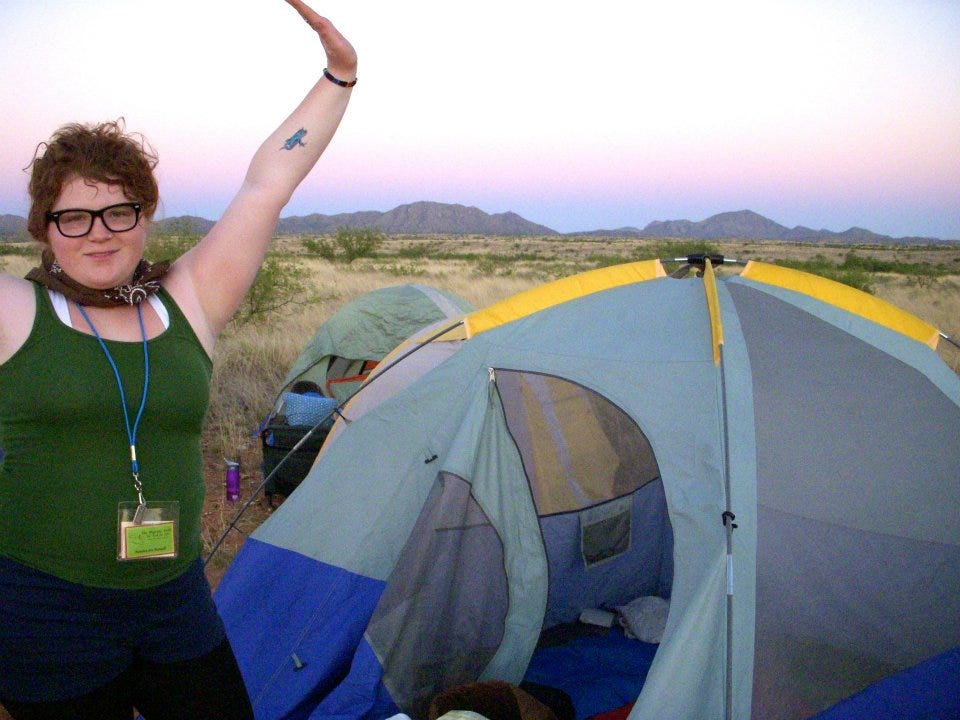
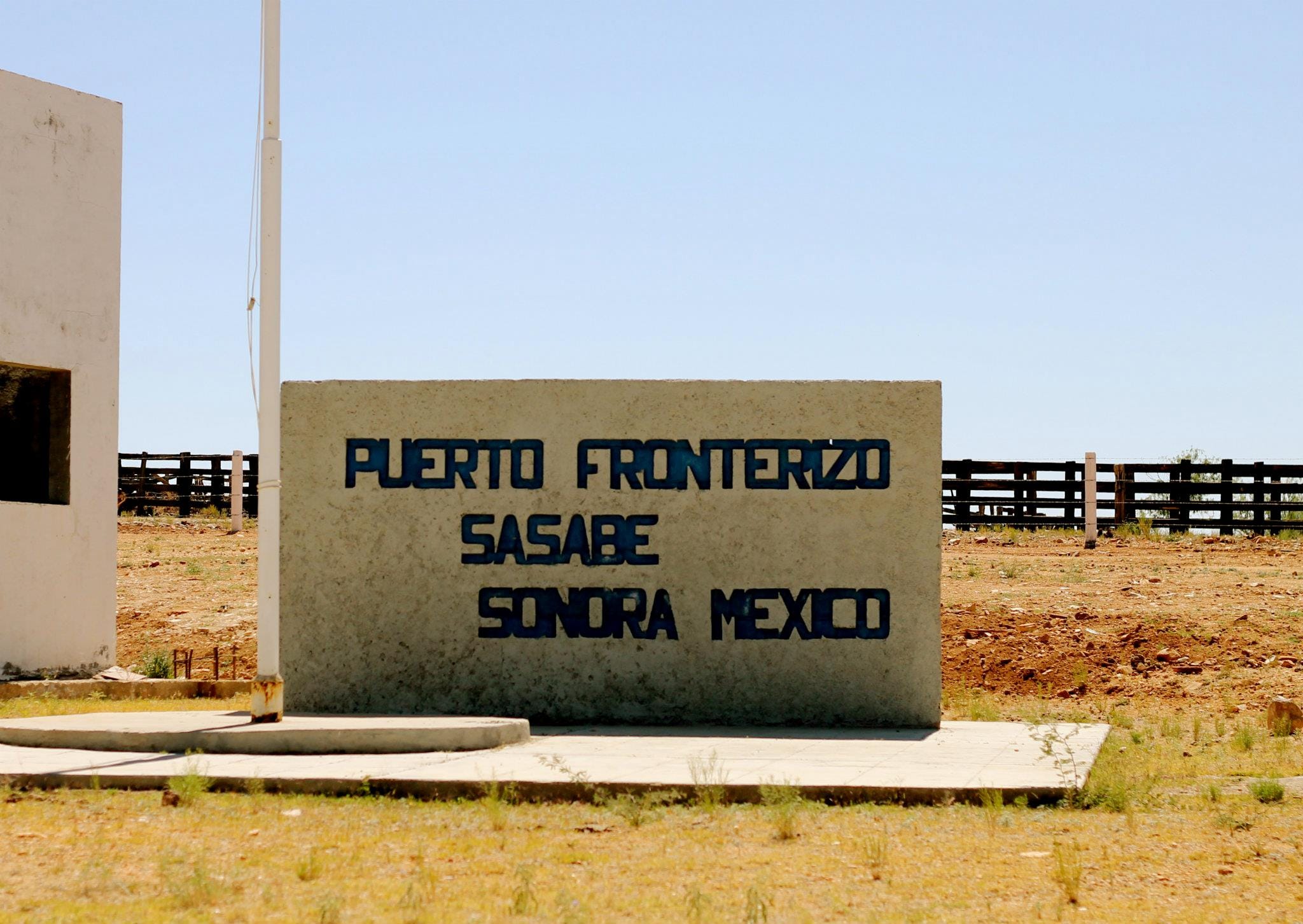
13-years ago, in June of 2012, I participated in The Migrant Trail—an annual, week-long walk that stretches 75-miles, beginning in Sásabe, Sonara, Mexico, through the Sonoran Desert, and ending in Tucson, Arizona.
The Migrant Trail’s inaugural walk was in 2004, emerging alongside the No Más Muertes/No More Deaths movement, and supported by similar organizations like Derechos Humanos and BorderLinks. The MT’s intention is to bear witness to the extraordinary number of migrant deaths and disappearances on the southern border, which remains the deadliest border in the world. In their Vision Statement, they affirm:
The precarious reality of our borderlands calls us to walk. We are a spiritually diverse, multi-cultural group who walk together on a journey of peace to remember people, friends and family who have died, others who have crossed, and people who continue to come. We bear witness to the tragedy of death and of the inhumanity in our midst. Lastly, we make this sacred journey as a community, in defiance of the borders that attempt to divide us, committed to working together for the human dignity of all peoples.
According to the Missing Migrants Project, since 2014, a total of 11,239 dead or missing migrants have been recorded in the Americas, with numbers rising consistently each year. 6,558 (over half) of those deaths and disappearances are from US-Mexico border crossings, and many of them are women and children.
I was inspired to join the MT by my college French professor, Christi Brooks, who had been involved with it for a number of years and used the topic of immigration in her French language courses. I was her student shortly before Arizona SB 1070 was passed in 2010 (the “show me your papers” law), which ignited debates across the political spectrum regarding racial profiling, human rights, immigration processes, labor, the U.S.’s history of military and colonial violence in the region—the fallout of which further shaped white supremacist narratives of immigrant criminality that would (at least in part) get Trump elected in 2016.
Growing up in Michigan near the northern border, these issues felt politically and geographically distant from me. Yet Christi used the pedagogy of language and culture to reveal the interconnectedness of our lives and bodies by inviting us to consider who gets to cross a border and when. Still trying to make sense of the chasm between the right-wing politics I grew up with and the views of professors I admired who were actively researching these issues, the opportunity to engage materially felt imperative for me. So, finally in 2012, I signed up.
Along with friends Cristen and Jamie, we roadtripped from Mt. Pleasant, Michigan to Tucson, making stops in Illinois and Kansas to sleep. Once we got to Tucson, we joined up with the MT group and carpooled down to the Mexican side of the border town, Sásabe, crossing into the U.S. on foot. A van carried our tents, sleeping bags, and supplies, and we stopped every 11-17 miles to rest and camp along the way. Unlike most migrants, we had the great privilege of long linen sleeves, sunscreen, hats, medical kits, and food and water refills every couple of miles. If you needed, you could ride in a van for a stretch.
Even despite having the luxury of safety protocols and provisions, I sensed that the desert could easily swallow me whole. Its vast, unforgiving terrain made it both beautiful and formidable. My understanding of the violence of the border took material shape through my own body.
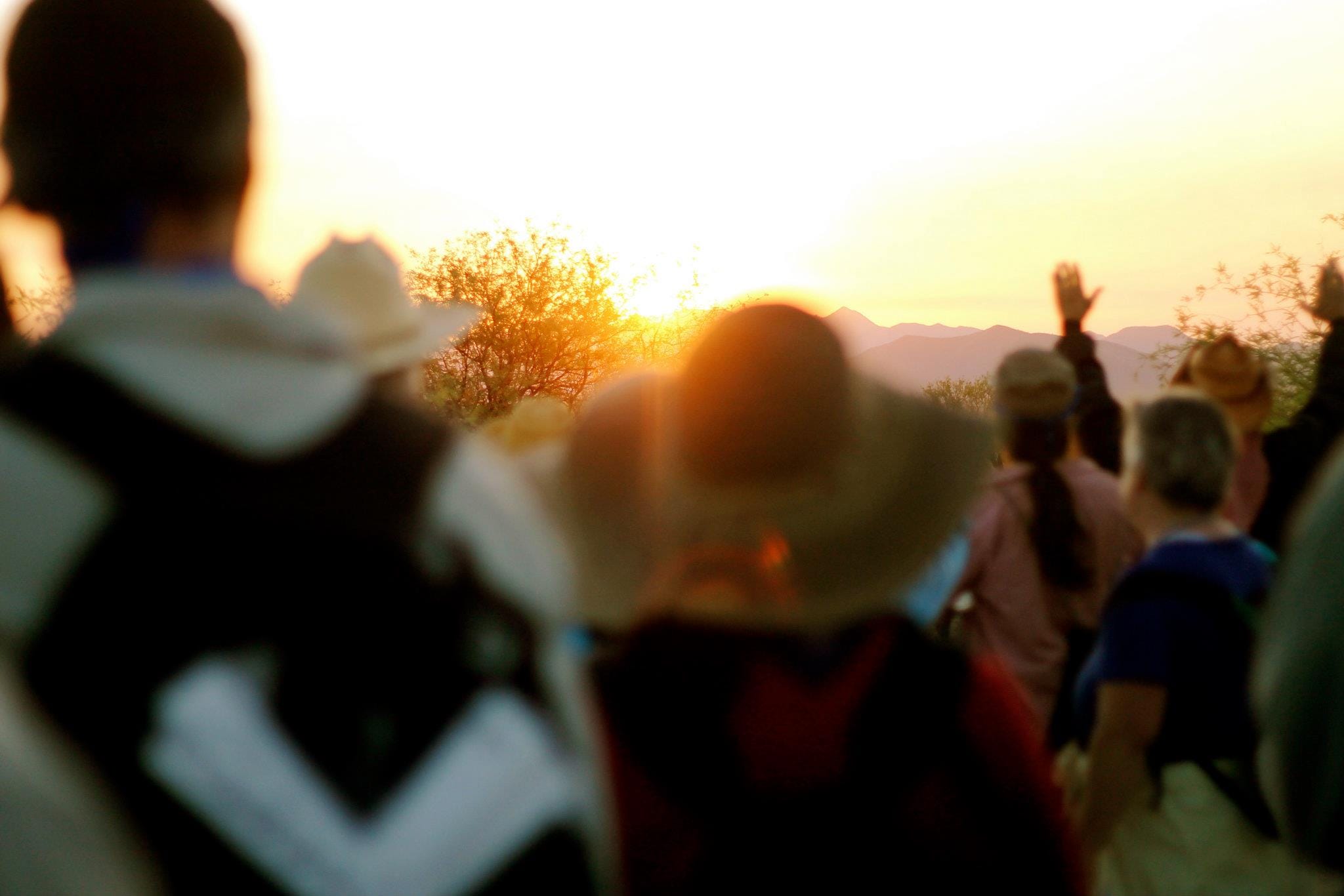
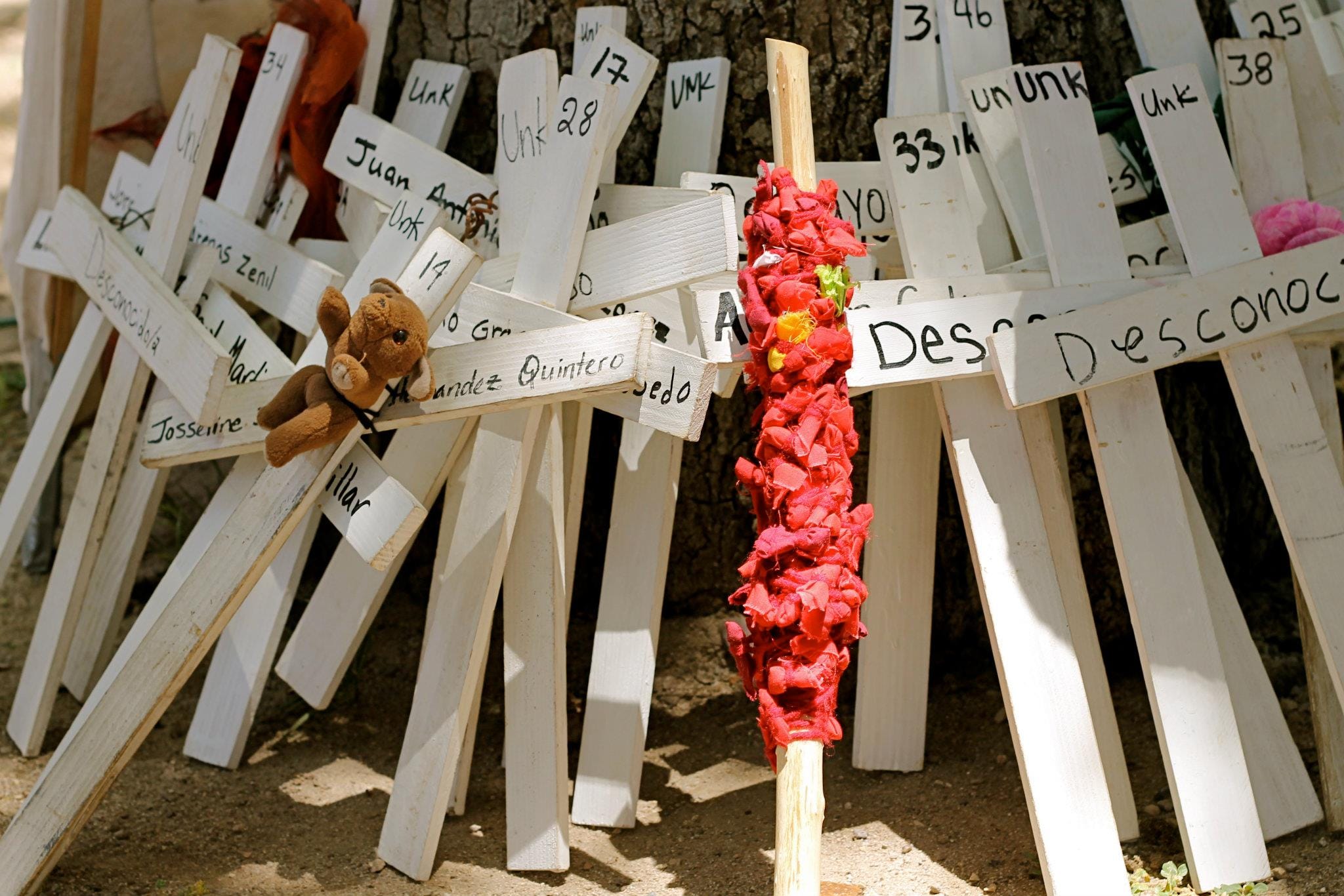
Each participant is given a cross with a name and the age of a missing or dead migrant. Many of them are simply “desconocida/o” (unknown), denoting migrant bodies that are unidentifiable. Once we reached Tucson, we placed them one by one against a tree, saying each of their names.
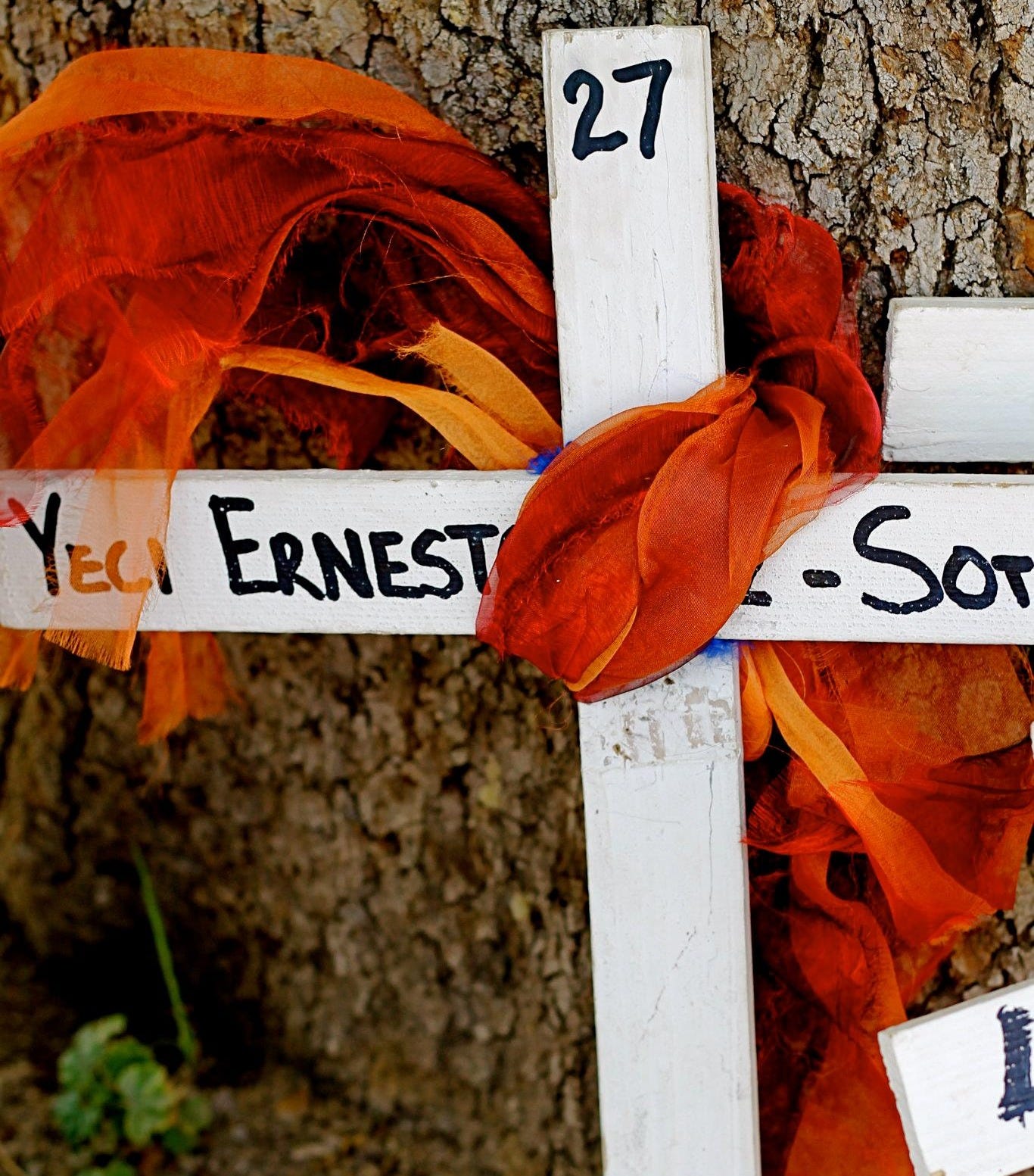
I carried the name of 27-year-old Yeci Ernesto, whose cross I wrapped in a fiery orange ribbon I received on the first day and wore in my hair throughout the week— which we lovingly referred to as “the spirit.”
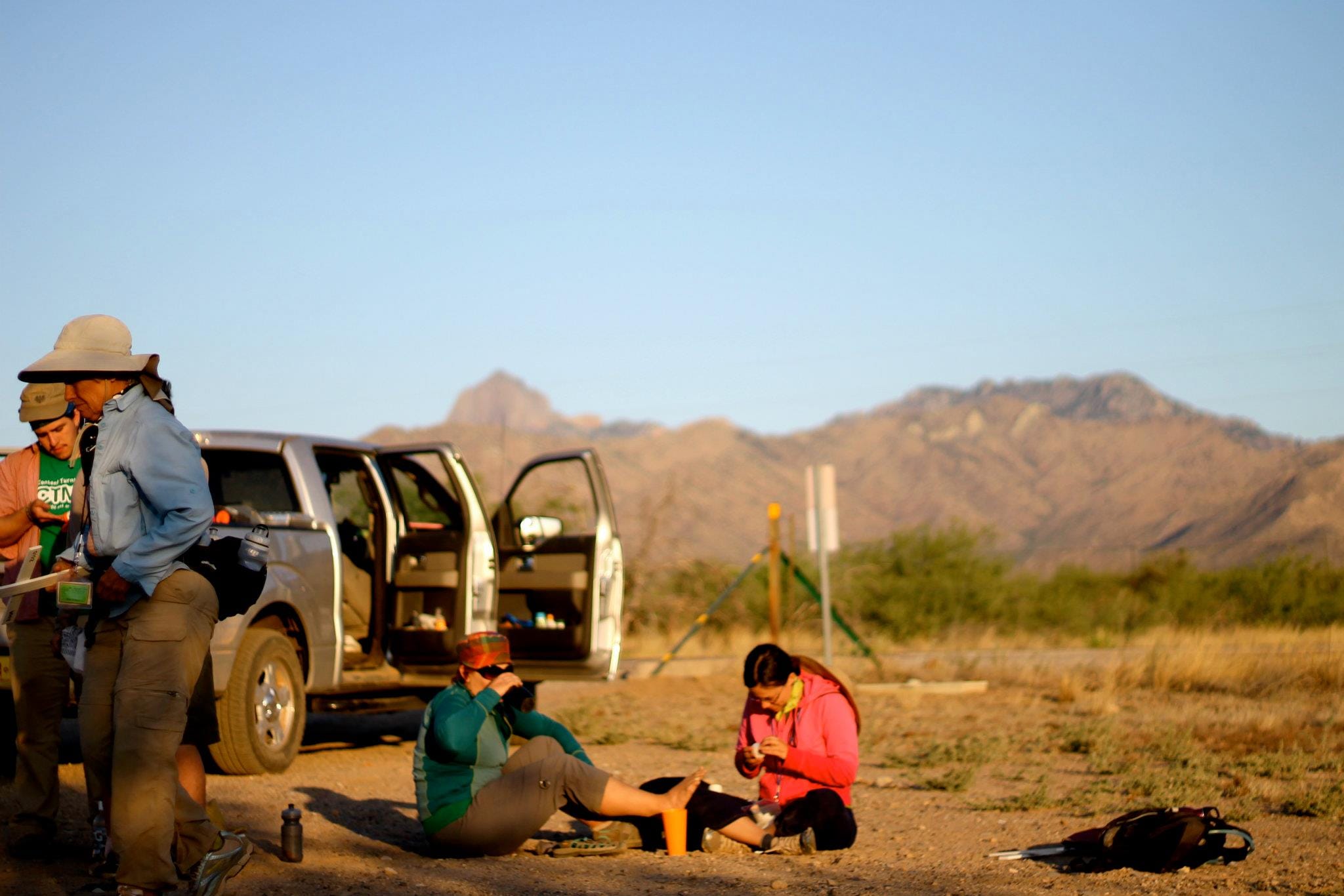
The walk itself was hard, and physically I had not trained nearly enough. I had blisters, foot problems, a horrible rash from the sun—things my soft Michigan body was not prepared for. I was furious at myself for being naive about the physical difficulty of the walk, and embarrassed by my political ignorance and lack of life experience, but my fellow walkers were kind and patient. They were ready to share their lives, their faiths, and their practices—and it gently redirected my own political and spiritual imaginations. This was the first time I met Quakers and lefty Mennonites, and this later prompted me to become part of my beloved Friends community here in Northampton, MA. It was revelatory to learn that one can have a faith without bigotry.
In my present-day life, I, like many, have been watching in horror this increased wave of ICE raids happen across the country. I’m seeing the same conversations and anxieties about criminality and immigration resurface, hearing (mostly) white Americans cheer on deportations, and I’ve been reflecting on this experience with the MT. I’ve been thinking about the body and all of its vulnerabilities.
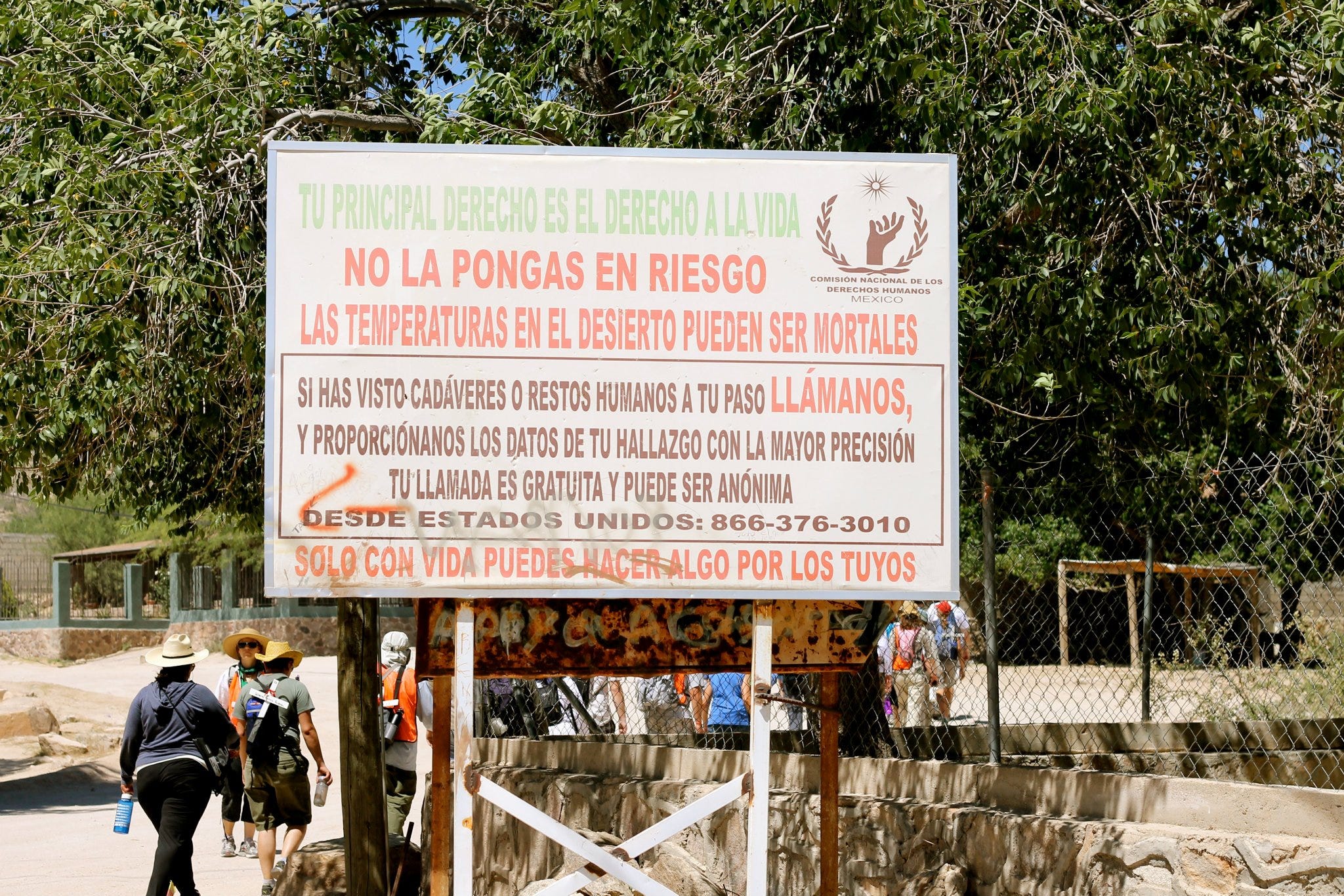
The MT also made clear the structural and legal barriers to saving or sustaining migrant life. One of No Más Muertes/No More Deaths’s main tasks is simply providing accessible water for migrants stop preventable dehydration deaths. Yet in many areas this is a punishable crime—in 2019 volunteers faced charges including property abandonment, entering a refuge without permission, and even felony charges for “harboring undocumented immigrants.”
The resounding emphasis on “legality” is, I think, one of the things where many people get stuck when we’re socialized to believe that the law itself is a moral good and ought to be trusted. The weaponizing of “legal” vs. “illegal” becomes a story about “good” vs. “bad” immigrants, without questioning how immigration laws themselves are shaped or any interrogation of the structural—legal and administrative— impossibilities created by design. The legal process can take years. It requires money, employment, sponsorship, access to housing/an address, transportation, interpreters, lawyers, time, health, among many other things. One’s racial, religious, class, and ethnic backgrounds matter when they are up against the multitude of biases held by law enforcement and the judicial system. When we imagine that is it possible for anyone to immigrate “legally,” we imagine a world in which our systems are inherently humane and just, and that everyone has equal access to life chances and resources (although some people people this implicitly—I adamantly do not).
As a graduate student in Comparative Literature, I taught a course called Brave New World, in which I included Alex Rivera’s 2008 film Sleep Dealer, wherein migrant workers near the southern border are connected to nodes and replaced by robots. The nodes and connections are dangerous and exploitative, but through this technology, the U.S. is able to extract and profit from migrant labor without having to consider migrant bodies and lives. This form of extraction and annihilation has long been the helm of the American project—from the genocide of indigenous peoples, to transatlantic slavery, to policing and the carceral system, to immigration raids.
I want to lay bare the interconnectedness of abortion rights and immigration rights—both of which are part of the framework we call reproductive justice, and both of which are subject to genocidal and eugenics logics. In Dorothy Roberts’s 1997 Killing the Black Body (a must read for anyone interested in RJ), she discusses how Black women’s reproductive decisions have long been “subject to social regulation rather than to their own will.” Slavery’s enduring logics have created a world where Black motherhood is understood as deviant and controllable, as Roberts writes in the Introduction, “poor Black women are blamed for perpetuating social problems by transmitting defective genes, irreparable crack damage, and a deviant lifestyle to their children.” Similarly, Black and Brown immigrants continue to be scapegoated for a manufactured drug crisis, labor scarcity, and all forms of deviance and criminality. This story continues to fuel and justify raids, the separation of families, deportations, disappearances, and concentration camps.
We are also seeing the gruesome ramifications of abortion restrictions across the country—the burden of which is experienced disproportionately by poor, immigrant, and Black and Brown people. On Friday, June 13th, a 1-pound, 13 ounce baby was born from the body of 31-year-old Adriana Smith via emergency c-section. Smith has been brain dead since February after suffering a medical emergency leading to clots in her brain. Due to Georgia’s rigid six-week abortion ban, at eight-weeks the state required her to be kept on life support to incubate her pregnancy against the will of her family.
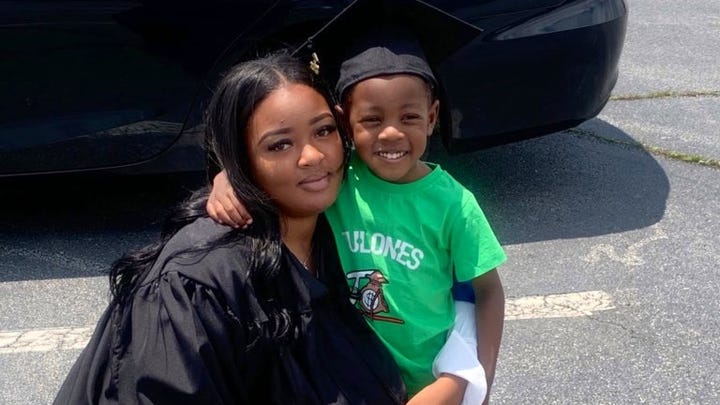
I use the passive “was born from” because I want to emphasize absence of agency on Smith’s part to give birth. Unable to consent, her body was used by the state to incubate a pregnancy to preserve the then 8-week fetal life, and again, through the exploitative extraction of the mother’s body and labor. Roberts’s point of “reproduction in bondage”—a practice she attributes to the continuity of slavery—remains salient.
It’s unclear how doctors made the decision to keep Smith on life support—aside from following the state’s legal parameters—yet, the law itself says nothing about brain death. In a blog entry for Bioethics Today, Dr. Arthur Caplan—the Drs. William F. and Virginia Connolly Mitty Professor of Bioethics at the Division of Medical Ethics at NYU—writes:
[this is a tragedy] tied up with uncertain facts, arguably bad state legislation, abortion politics, and even confusion over patient rights. What ought to be clear is that the proper categorization of using dead bodies as incubators for embryos or very young fetuses is nothing but an experiment. As such, there is no obligation on anyone’s part to conduct it.
In addition to dealing with the loss of their daughter, Smith’s family is responsible for the financial burden of these medical procedures. The baby, Chance, will need to be kept in the hospital’s neonatal intensive care unit. Her mother, April Newkirk, told Atlanta’s 11 Alive that, "He's expected to be OK…He's just fighting. We just want prayers for him. Just keep praying for him. He's here now."
I’ve seen “pro-life” responses citing this study on brain death and pregnancy, arguing that such practices are medically viable and ought to be normalized, yet the mean gestational age in this study was 20 weeks. Smith was at 8 weeks and kept on life support for four months . Adriana Smith’s life mattered, but her body and death were made into a spectacle via a new, egregious precedent.
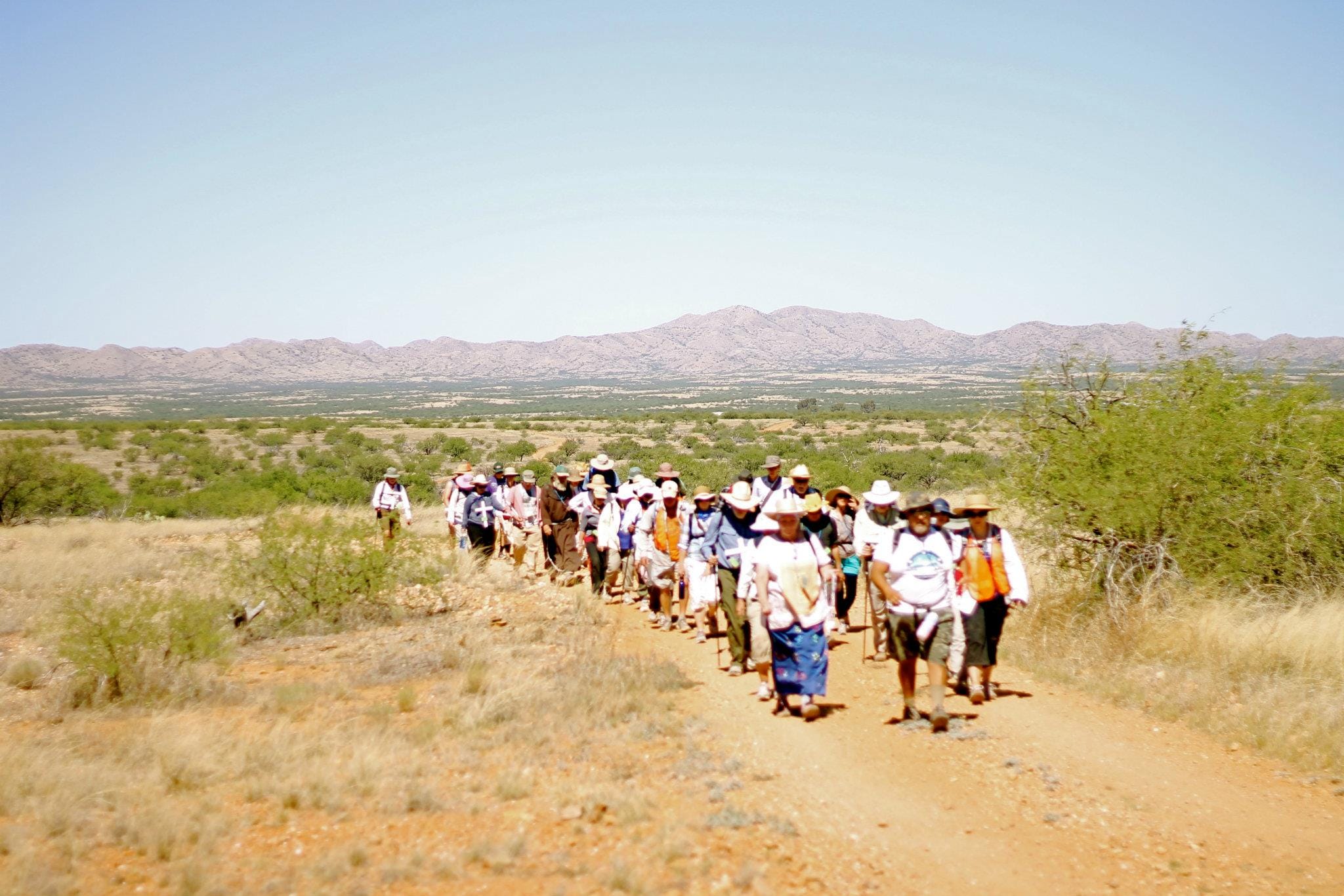
I’m going to keep thinking about The Migrant Trail and the southern border in the coming weeks—in all of its material and metaphorical holdings. I’ll try to remember the textures of the desert, and how quickly my body became susceptible to its wild and magnificent inhospitality. I’ll remember that that vulnerability is ready for all of us, and that our access to life-sustaining resources is determined by the accident of our births. I’ll imagine the slowness of our movement through the desert, and the way we reminded one another to hydrate and rest when needed. I’ll try to keep the names of Adriana Smith and Yeci Ernesto close and soft, bearing witness to their lives in spite of the apparatuses that seek to legitimize and calcify their deaths.
To my Migrant Trail friends: Thank you for bearing witness and for teaching me. I hope to join you again one of these years.